We Drove Tesla FSD in Australia - It’s Real, and It’s Coming Soon
We drove Tesla’s FSD in Australia: real streets, real traffic, zero hands. Here’s why rollout could be just around the corner.

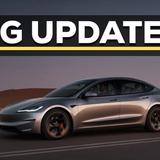
Tesla gave us access to a pre-release build of Full Self-Driving on Brisbane roads in a right-hand-drive Model 3 “Highland.” This wasn’t a fenced-off demo; it handled real traffic, roundabouts, merges and parking while we supervised and stood ready to intervene. Our take: it’s surprisingly competent, mostly cautious, and closer to everyday usefulness than we expected.
On our loop, FSD selected lanes, executed right turns, negotiated roundabouts without drama and completed a park near our destination. It cancelled a lane change when a car entered the blind spot and generally erred on the side of patience. We did see a couple of conservative slow-downs and one mismatch with the posted limit, where we briefly overrode it - useful reminders that this is still a supervised system.
Why should Australian owners care now? Because Tesla’s local leadership says the company is through the regulatory hurdle-hunting and is in the “final stages of validation,” with a phased rollout planned. Public testing here has ramped up for months, including those much-shared clips navigating Melbourne’s hook turns and a full run through Sydney’s streets. That kind of local tuning usually precedes a wider release.
Compatibility will matter. Tesla’s ANZ boss has pointed to an initial release on newer Hardware 4 vehicles, expanding from there as validation allows. If you’re in an earlier car, manage expectations until Tesla confirms support.
Legally, nothing here changes who’s responsible. “Full Self-Driving (Supervised)” still requires an attentive, licensed driver, hands-on and eyes forward; Tesla’s own support pages spell that out, and Australia’s current framework allows driver-assist features but not unsupervised operation. In short: this is Level-2-style assistance, not driverless tech.
Money will also be a factor. FSD in Australia has historically been offered as a paid add-on of around A$10,100, with subscriptions trialled in other markets; we’re still waiting on updated local pricing or subscription details tied to this release. Our advice is simple: don’t buy until your VIN actually gets the feature, then decide whether the value fits your driving.
The broader context matters. Tesla’s clean, software-first cabin concept has been widely copied, and price competition - especially from Chinese brands - is fierce. A competent, locally-tuned FSD (Supervised) is Tesla’s clearest differentiator right now, and after spending hours letting the car handle the tedious bits, it does make commuting less of a chore. That doesn’t replace the joy of driving for enthusiasts, but it could be the feature that nudges fence-sitters into a Tesla.
Bottom line after our Brisbane drive: FSD (Supervised) feels real, useful and mostly polished, with a few conservative edges we’d expect Tesla to smooth before a broad release. If you own a HW4 Model 3 or Model Y, you’re likely first in line; everyone else should wait for formal compatibility news. And remember - supervised means you’re still the driver.
Tesla hasn’t given a firm date, but after supervised media drives in Brisbane, Melbourne, and Sydney, a local rollout looks close. The system is in “final validation,” which suggests release could be within months, though Tesla is known for shifting timelines.
Only newer vehicles with Tesla’s Hardware 4 (HW4) camera and compute suite will initially be compatible. Earlier Model 3 and Model Y units running Hardware 3 will likely miss out unless Tesla later extends support.
Yes — but only in supervised form. Drivers must remain attentive, with hands on the wheel and eyes on the road. An unsupervised or driverless mode is not yet legal under Australian regulations.
Tesla has historically priced FSD at around A$10,100 as a one-off purchase. Subscription pricing has been trialled overseas, but Tesla hasn’t confirmed whether that option will be offered locally.